How to Check If Eyeliner Looks Even Without Over-Correcting
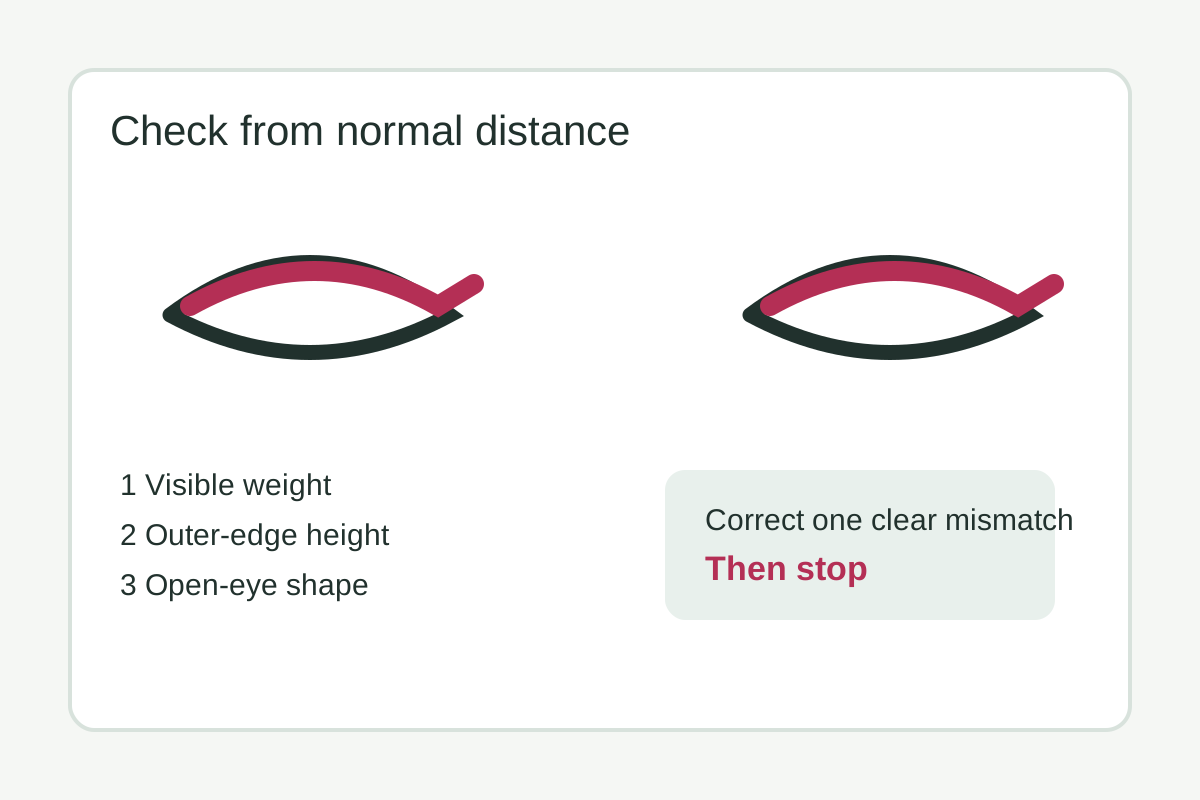
Compare eyeliner at normal distance by visible weight, outer-edge height, and open-eye shape, then stop after one clear correction.
Fit Ladder handoff
Color
Use this route as the next small test. Save checklist items on the homepage Fit Ladder when you want the path to follow you.
- Move
- Step back from the magnifying mirror, compare the three visible cues once, correct only the clearest mismatch, and stop before both sides become heavier.
- Cue
- placement, amount, tool pressure, and finish
- Stop
- Stop when blend, wear time, face balance, and cleanup effort is clear enough to repeat or skip.
Quick answer
Open both eyes and compare visible line weight, outer-edge height, and the shape that remains visible in a normal mirror. Choose the clearest mismatch, correct it once, then stop. Similar visual weight matters more than identical geometry.
How this advice stays bounded
- Editor
- Glow Logic Editorial Desk
- Updated
- 2026-07-04
- Useful for
- Judge a finished upper-lash-line eyeliner look at normal distance and decide whether to keep it, make one small correction, or stop using the product.
Reference guardrails
- FDA Eye Cosmetic SafetyUsed for hygiene, sharing, contamination, moving-vehicle, irritation, and infection stop boundaries.
- FDA MakeupUsed for ordinary cosmetic-use context, not diagnosis or treatment.
- FDA Cosmetics Labeling GuideUsed for product-label context without treating a label as a personal safety guarantee.
At-a-glance fit check
Use these cues to choose one small adjustment.
Decision asset
A three-cue eyeliner balance card for visible line weight, outer-edge height, and open-eye shape with a one-correction stop rule.
Leave the magnifying mirror before judging
A close mirror enlarges tiny gaps and edge differences that disappear at ordinary viewing distance. Open both eyes, relax the lids, and step back far enough to see the full eye area at once. Check the finished look before adding product. The first question is whether one side reads clearly heavier, lower, or more extended, not whether every millimeter matches.
Compare visible weight before line shape
Look at how much dark liner remains visible above the lashes with both eyes open. Natural lid folds can hide different amounts of the same line, so identical drawn width may not create similar visible weight. If both eyes read with similar emphasis, keep the thinner result even when the closed-eye lines are not geometrically identical.
Check one outer-edge cue
Compare where each line ends and whether one outer edge appears clearly lower, longer, or blunter. Pick only the most visible difference. Clean or shorten that edge with a clean cotton swab or small brush instead of redrawing the full lash line. A small endpoint correction is easier to control than alternating between both eyes.
Use open-eye shape as the final check
Look forward normally and notice whether a fold hides part of one line or flick. Judge the shape that is actually visible rather than pulling the lid flat. If the two eyes have similar overall direction and weight, stop. Facial and eyelid asymmetry means a balanced result does not require mirrored geometry.
Stop after one clear correction
Repeated correction usually adds width to both sides without settling the original difference. After one cleanup or small added stroke, step back once more. Keep the result if the mismatch no longer draws attention. Save the remaining observation for the next practice rather than turning one application into an endless redraw.
Keep eye-cosmetic safety separate from symmetry
Do not share eyeliner, add liquid to revive a changed product, or apply eye cosmetics in a moving vehicle. Stop using the product if it causes irritation. Persistent pain, swelling, injury, infection signs, vision changes, or other concerning symptoms need qualified eye care; visual balance checks do not assess an eye problem.
Checklist
- Open both eyes and step back
- Compare visible line weight
- Check one outer-edge difference
- Judge the open-eye shape
- Correct only the clearest mismatch
- Stop after one correction
- Stop product use for irritation
Build your working checklist
Save a local progress note for how to check if eyeliner looks even without over-correcting, filter unfinished items, or print the page for an offline routine check.
Common mistakes
- Matching closed-eye geometry instead of visible open-eye weight.
- Alternating corrections until both lines become thick.
- Pulling the eyelid into a shape that disappears when released.
- Continuing through irritation to finish the comparison.
Editorial boundary
This page teaches a cosmetic comparison and eye-cosmetic hygiene. It cannot assess eye symptoms, resolve irritation or infection, guarantee product safety, or replace qualified eye care.